
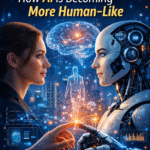





5 Ways Artificial Intelligence is Becoming More Human-Like
How Generative AI is Revolutionizing Creativity and Everyday Technology
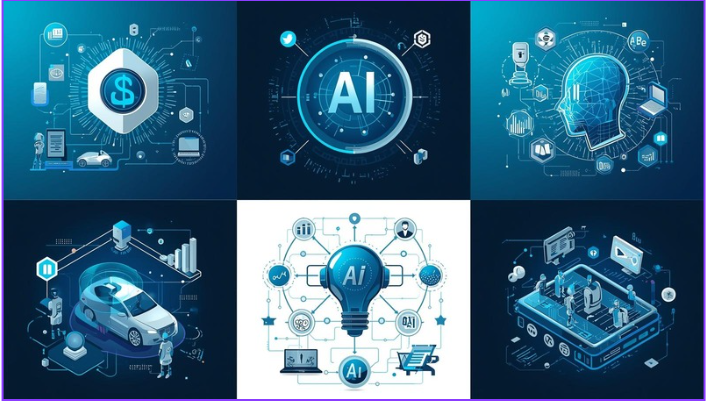
Artificial Intelligence (AI) has rapidly evolved from a futuristic concept into a vital part of our daily lives. Today, AI powers everything from smartphones that enable instant communication to applications that support work, leisure, and even self-driving vehicles. Its presence is reshaping the way we interact with technology, making everyday tasks smarter, faster, and more efficient.
Advancements in computing power, the availability of vast datasets, and sophisticated algorithms have significantly accelerated AI’s expansion. This growth has cemented AI as a dynamic and influential technology that is transforming industries worldwide. From enhancing business operations to creating new opportunities in healthcare, finance, and education, AI is no longer a mere tool but a driving force behind innovation.
One of the most exciting trends in AI is Generative AI. Unlike traditional AI that focuses primarily on predicting outcomes, Generative AI can create original content, including text, images, music, and videos. This shift from analysis to creation has opened up entirely new avenues for creativity and automation, empowering professionals across fields.
Tools such as Chat GPT, DALL-E, and Midjourney demonstrate AI’s immense creative potential. Marketers, designers, educators, and content creators can now produce high-quality work rapidly, reducing the time and effort required while enhancing quality. Generative AI is helping businesses personalize campaigns, optimize workflows, and strengthen their creative strategies, proving that AI is not just a computational tool but a collaborative partner in innovation.
As AI continues to evolve, its applications are expanding exponentially. Companies are adopting AI to enhance decision-making, improve customer experiences, and drive efficiency across multiple sectors. At the same time, AI is shaping the future of content creation, making processes smarter, more automated, and highly adaptive to individual and organizational needs. The ongoing integration of Artificial Intelligence into daily life and business workflows highlights its transformative power, making it a cornerstone of modern technology and innovation.
Revolutionizing Healthcare: How AI is Improving Diagnostics and Patient Care
Healthcare is also undergoing an AI-driven revolution. Artificial Intelligence diagnostic tools, predictive analytics, and patient monitoring systems are streamlining care and treatment planning. Advanced algorithms interpret medical images with accuracy surpassing previous capabilities, enabling faster and more precise diagnoses. Predictive analytics empower providers to anticipate health issues, detect diseases early, and recommend preventive action. Virtual health assistants and AI chatbots enhance care by offering round-the-clock support, answering medical questions, and guiding patients through treatments. As AI evolves in healthcare, it promises better outcomes and significant cost reductions, making quality care more accessible and efficient worldwide.
Natural Language Processing (NLP): How AI is Revolutionizing Communication and Customer Experience
Natural Language Processing (NLP), a subfield of Artificial Intelligence, is advancing rapidly and enabling machines to understand, interpret, and generate human language more effectively. This has paved the way for intelligent chatbots, virtual assistants, and real-time language translation tools that have become integral in businesses and daily communication. NLP enables companies to analyze customer feedback, extract meaningful insights, and enhance the overall user experience through sentiment analysis. The accuracy and efficiency of AI-powered communication tools have made interactions smoother, more personalized, and more productive, bridging the gap between human and machine understanding. This trend not only benefits businesses but also enhances accessibility for users who rely on AI tools for communication, learning, and information retrieval.

Edge AI: Bringing Real-Time Intelligence to Devices and IoT
Another emerging trend is Edge Artificial Intelligence, which refers to the deployment of Artificial Intelligence algorithms directly on devices rather than relying solely on cloud computing.
Edge AI enables real-time data processing on smartphones, cameras, IoT devices, and industrial equipment. This reduces latency and improves privacy by keeping sensitive data local.
Applications of Edge AI are vast. Smart home devices can detect anomalies immediately, autonomous vehicles can process sensor data on-board for instant decision-making, and industrial robots can perform quality checks in real-time.
By bringing AI closer to the source of data, Edge AI facilitates faster and more secure operations across multiple industries, addressing the limitations of cloud-only AI systems.
AI in Automotive: Driving the Future of Autonomous Vehicles
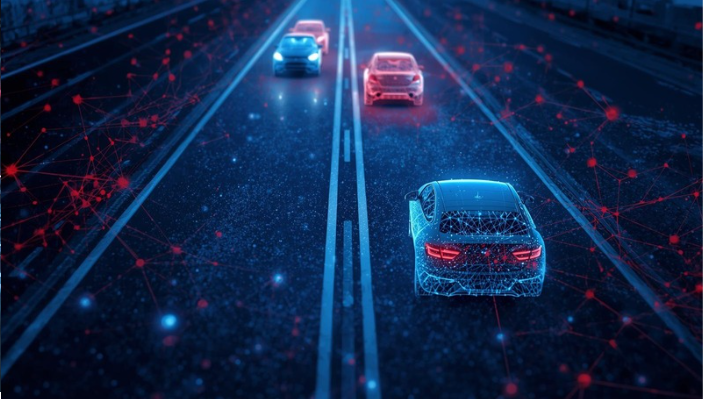
The automotive industry is witnessing remarkable changes due to Artificial Intelligence (AI), particularly in the development of autonomous vehicles.
Self-driving cars utilize a combination of computer vision, sensor fusion, and machine learning algorithms to navigate roads safely without human intervention.
Advanced driver-assistance systems (ADAS) are improving road safety by providing automated alerts, collision detection, and adaptive cruise control. AI is also being used for traffic prediction, route optimization, and monitoring driver behavior to reduce accidents.
While fully autonomous vehicles are still being refined, AI continues to drive innovations that make transportation safer, more efficient, and sustainable.
Ethical AI: Ensuring Transparency, Fairness, and Accountability in Artificial Intelligence
As AI becomes increasingly pervasive, the importance of ethical and responsible Artificial Intelligence development has come into sharp focus.
Responsible AI emphasizes transparency, fairness, and accountability, ensuring that AI systems do not perpetuate biases, misuse data, or cause harm.
Organizations and governments are developing guidelines and frameworks to ensure ethical AI practices, including bias detection in AI models, transparent decision-making, and compliance with data privacy regulations.
Ethical AI is critical to building trust in technology and ensuring that AI advancements benefit society as a whole, rather than creating unintended negative consequences.

AI in Cybersecurity: Protecting Data and Preventing Cyber Threats
Cybersecurity is another area where AI is making a significant impact. As cyber threats become more sophisticated, Artificial Intelligence-powered systems are being deployed to detect anomalies, predict attacks, and respond automatically to potential threats. Machine learning algorithms can analyze vast amounts of data to identify suspicious activity, prevent fraud, and enhance overall digital security. In banking, finance, and e-commerce, AI helps safeguard sensitive information, monitor transactions in real-time, and reduce the risk of cyberattacks. With the increasing reliance on digital systems, AI-driven cybersecurity has become a vital tool for both organizations and individuals seeking to protect their data and privacy.

AI and Robotics: Revolutionizing Automation and Smart Machines
Robotics is being revolutionized by Artificial Intelligence, making machines smarter, more autonomous, and capable of performing complex tasks. AI-powered robots are used in manufacturing, logistics, healthcare, and even service industries to enhance productivity and efficiency. Collaborative robots, also known as cobots, work alongside humans to perform repetitive or dangerous tasks safely. AI-enabled drones are employed for deliveries, agricultural monitoring, and surveillance, while autonomous industrial robots are optimizing production processes. The combination of AI and robotics is expanding the possibilities for automation, innovation, and precision across multiple sectors.
AI in Finance: Smarter Risk Management and Customer Service
Finance and banking have also embraced Artificial Intelligence to improve risk management, fraud detection, and customer experience. AI algorithms can analyze large datasets to detect unusual patterns, assess credit risk, and provide personalized financial advice. Chatbots powered by AI assist customers in real-time, answering queries, processing transactions, and offering investment recommendations. By automating critical processes and enhancing decision-making, AI is helping financial institutions operate more efficiently while providing better service to their clients. This trend indicates a future where AI-driven finance becomes increasingly intelligent, personalized, and secure.

The Future of AI: Human-Like Intelligence and Widespread Adoption
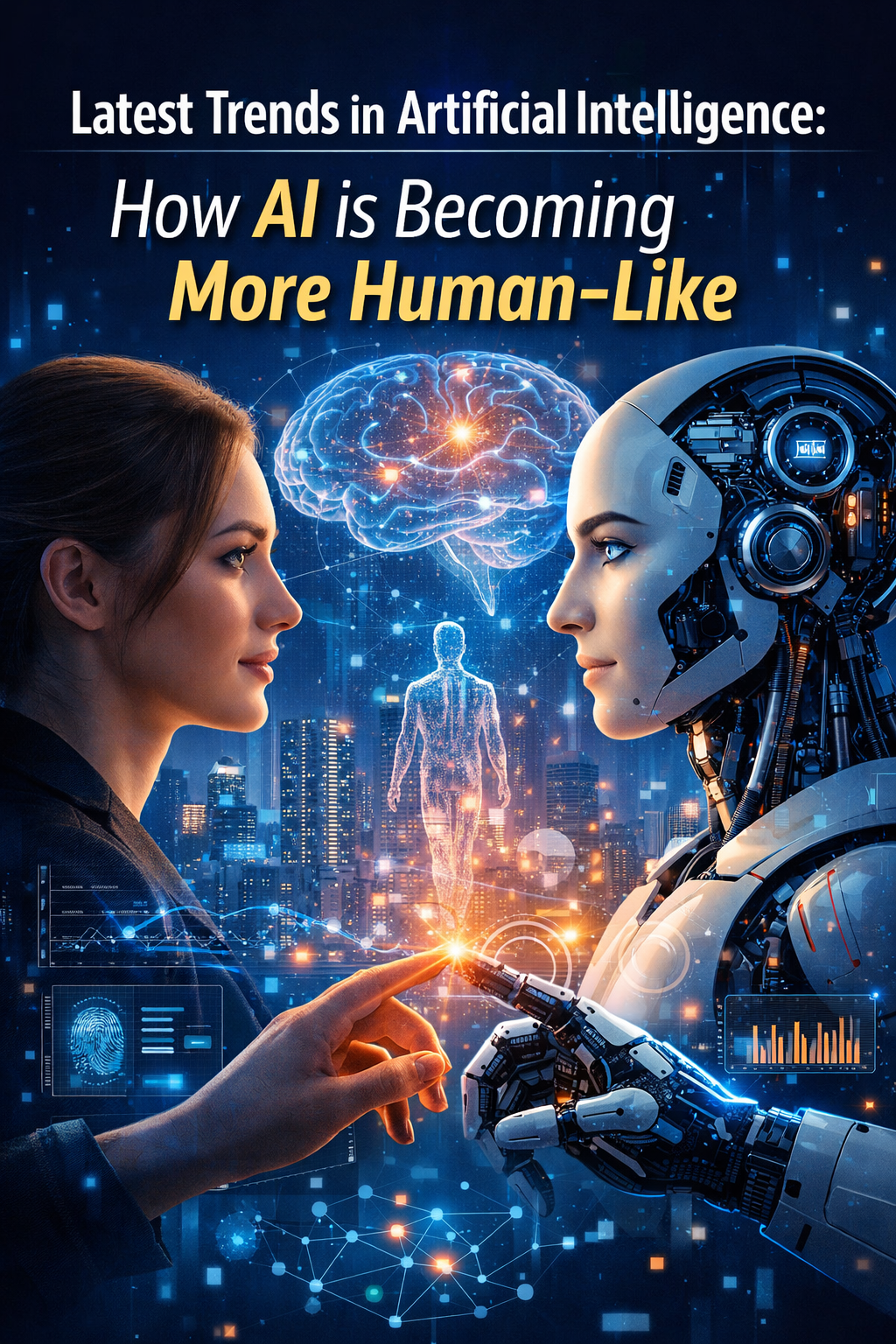
Looking ahead, the future of Artificial Intelligence holds even more promise. Innovations like quantum AI, emotion recognition, and AI-driven creativity are on the horizon, signaling a new era of technological possibilities. AI is expected to become more human-like in reasoning, understanding context, and making complex decisions. Small and medium-sized businesses are likely to adopt AI more widely, leveraging its capabilities for personalization, optimization, and automation. As AI continues to evolve, it will permeate every aspect of life, from education and healthcare to entertainment, transportation, and business operations. Staying updated with AI trends is essential for individuals, developers, and organizations aiming to harness the full potential of this transformative technology.

Conclusion: AI as a Transformative Force in the 21st Century
In conclusion, Artificial Intelligence is no longer a niche technology; it is a transformative force shaping the modern world. From generative AI and healthcare innovations to autonomous vehicles and ethical Artificial Intelligence practices, the latest trends highlight the immense potential of AI to improve efficiency, creativity, and decision-making across industries. By embracing AI and understanding its evolving capabilities, businesses, individuals, and society can leverage this technology to drive progress, innovation, and sustainable growth. The future of AI is bright, and its impact will continue to grow, making it one of the most critical technologies of the 21st century.





Post Comment