







Natural Language Processing: 7 Key for Business Success

Introduction to Natural Language Processing (NLP)
Natural Language Processing, commonly referred to as NLP, is one of the most significant branches of Artificial Intelligence. It enables machines to understand, interpret, and respond to human language in a meaningful way. Human language is complex, filled with context, emotions, slang, and variations, which makes it difficult for machines to process. NLP bridges this gap by combining linguistics, machine learning, and deep learning techniques. Today, NLP is widely used in search engines, chatbots, voice assistants, and content analysis tools. As digital communication continues to grow rapidly, NLP has become increasingly essential for businesses seeking to enhance user interaction and automate processes.
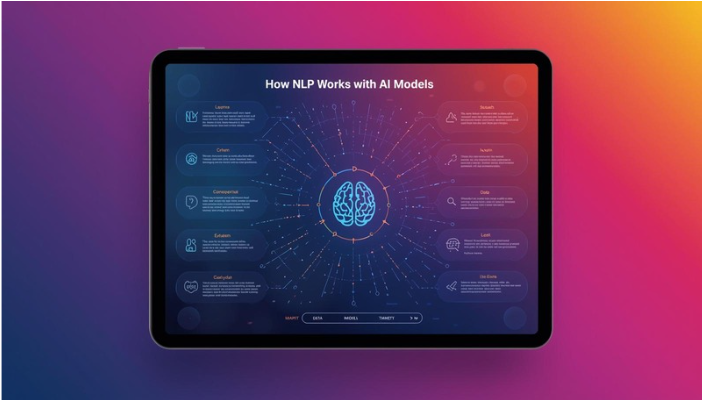
How NLP Works with AI Models
Natural Language Processing works by breaking down language into smaller components such as words, phrases, and sentences. Techniques such as tokenization, part-of-speech tagging, and named entity recognition enable machines to understand the structure of text. Advanced AI models analyze grammar, syntax, and semantics to extract meaning. With the help of machine learning, NLP systems learn from large datasets and continuously improve accuracy. Deep learning models such as transformers have significantly enhanced NLP performance, enabling more human-like understanding and responses.
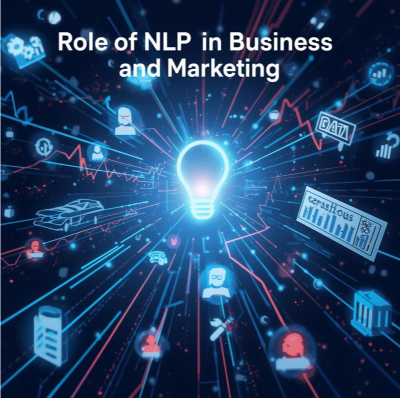
Role of NLP in Business and Marketing
Businesses use Natural Language Processing to analyze customer feedback, reviews, emails, and social media conversations. Sentiment analysis enables companies to understand their customers’ emotions and opinions. NLP-powered tools assist in content creation, email automation, and customer support systems. By understanding user intent, businesses can personalize marketing strategies and improve customer experience. NLP also helps brands monitor online reputation and make data-driven decisions faster and more accurately.
NLP in Chatbots and Virtual Assistants
One of the most popular applications of Natural Language Processing is in chatbots and virtual assistants. These systems understand user queries and provide relevant responses in real time. NLP allows chatbots to handle natural conversations rather than fixed commands. Virtual assistants like Siri, Alexa, and Google Assistant rely heavily on NLP to process voice commands, answer questions, and perform tasks. This technology improves customer service efficiency and provides 24/7 support without human intervention.

NLP for Search Engines and SEO
Search engines use Natural Language Processing to understand search queries and deliver accurate results. Google’s algorithms analyze user intent rather than just keywords. NLP improves search accuracy by understanding synonyms, context, and sentence meaning. For SEO, NLP helps content rank better by focusing on relevance and user intent. Well-structured, natural content optimized with NLP principles performs better in search results and improves website visibility.

Challenges and Ethical Considerations in NLP
Despite its advancements, Natural Language Processing faces challenges such as language ambiguity, bias in data, and contextual misunderstandings. Ethical concerns include data privacy and misinformation. NLP models learn from large datasets, which may contain biased information. Responsible development and transparent AI practices are essential to ensure fairness and trust. Continuous improvement and ethical guidelines help reduce risks and enhance reliability.

Applications of Natural Language Processing in Modern Technology
Natural Language Processing plays a crucial role in modern technology by enabling machines to communicate with humans naturally and intelligently. NLP is widely used in chatbots, virtual assistants, voice search, text summarization, and real-time language translation systems. Businesses rely on NLP to analyze customer feedback, emails, reviews, and social media conversations to gain valuable insights. In healthcare. NLP helps process medical records and clinical notes.
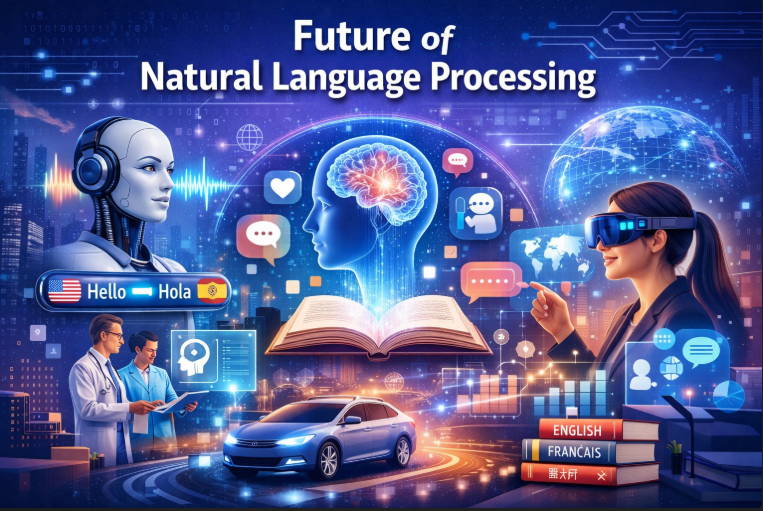
Future of Natural Language Processing
The future of Natural Language Processing is promising as models become more accurate, multilingual, and context-aware. Emotion recognition, real-time translation, and advanced conversational AI are emerging trends. Natural Language Processing will continue to transform industries such as healthcare, education, finance, and e-commerce. As human-machine interaction grows, NLP will play a critical role in creating intelligent, user-friendly digital experiences.





Post Comment